
What Events Are Perfect for Turquoise? Outfit and Makeup Ideas
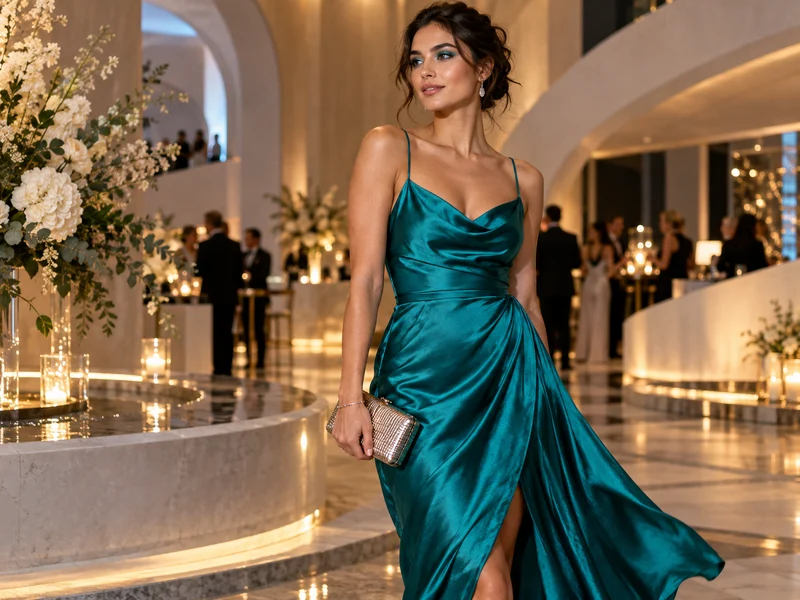
Turquoise is one of those colors that can look relaxed by the sea, romantic at a wedding, or surprisingly sophisticated at a black-tie event. The difference is rarely the color alone. It comes down to the depth of the shade, the fabric, the dress code, and what you wear around it.
That versatility is exactly why turquoise keeps returning to fashion and beauty. Pale aqua feels fresh and easy in daylight, classic turquoise brings energy to a party look, and deep teal can behave almost like navy after dark. If you have ever loved the color but wondered where it actually belongs, this guide will help you choose the right version without looking overdone.
Turquoise works especially well for weddings, engagement parties, garden receptions, beach events, birthdays, cocktail parties, formal dinners, proms, graduation celebrations, galas and fashion shoots. Use lighter shades by day and deeper teal for evening.
Why turquoise works for so many events
Turquoise sits between blue and green, so it borrows something useful from both. It has the freshness people associate with aquatic blues, but it can also carry the richness of a jewel tone. That is why the same color family can move from a breezy summer dress to a velvet evening gown without feeling out of place.
Color forecasters at WGSN describe Transformative Teal as a fusion of dark blue and aqua green. They also suggest using it as an alternative dark for occasionwear and across beauty, hair and nails. In practical terms, deep teal can do much of the work of navy or black while giving the outfit more personality.
Light, airy and best suited to daytime, warm-weather and beach settings.
Bright and energetic, making it an easy choice for parties and statement accessories.
Deeper and more formal, especially in satin, velvet, crepe or structured tailoring.
Weddings, engagement parties and garden receptions
Turquoise is a natural fit for celebratory daytime events. It photographs beautifully against greenery, pale stone, white flowers and warm sunlight. For a wedding guest outfit, I would choose a flowing turquoise midi or maxi dress, then soften it with champagne-gold jewelry, nude shoes and a small neutral bag.
Aqua works particularly well for spring and summer garden weddings. Deep teal is better when the invitation feels more formal or the ceremony continues into the evening. For a destination or beach wedding, turquoise also connects naturally with the setting. The Knot’s beach wedding guide notes that turquoise and teal complement the surrounding water, which is why the palette rarely feels forced near the coast.
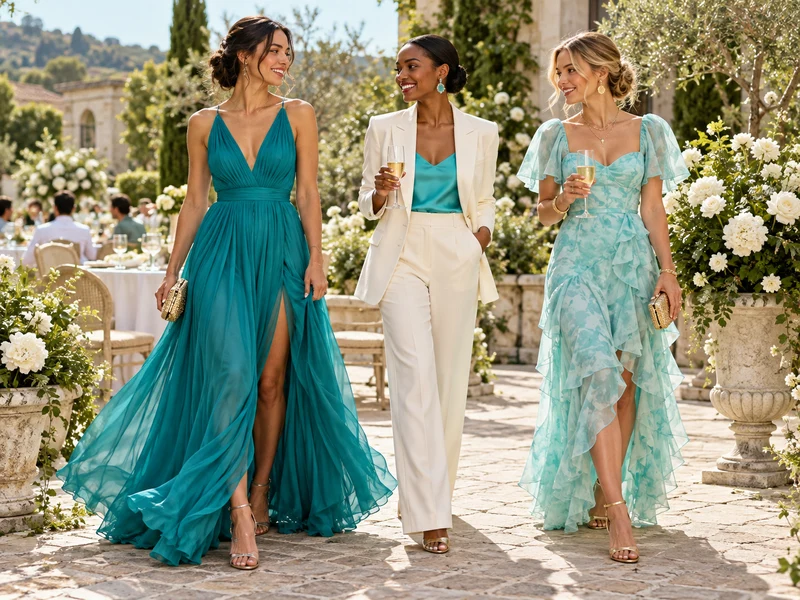
If the couple has chosen turquoise as a wedding color, check whether it is reserved for the bridal party before wearing a head-to-toe version. A turquoise bag, shoe or eye detail is an easy alternative.
Cocktail parties, birthdays and dinner dates
For a cocktail party or birthday, classic turquoise gives you more freedom to play. A satin slip dress, fitted midi, tailored jumpsuit or bright turquoise bag can become the main feature. The easiest formula is one strong turquoise piece with simple black, cream or metallic accents.
If the dress is already bright and body-skimming, keep the accessories compact and let the silhouette carry the look. The same balance applies when styling a fitted dress; our guide to making a bodycon mini dress feel modern explains why one strong texture or color story usually looks cleaner than several competing details.
Galas, black-tie events and formal evenings
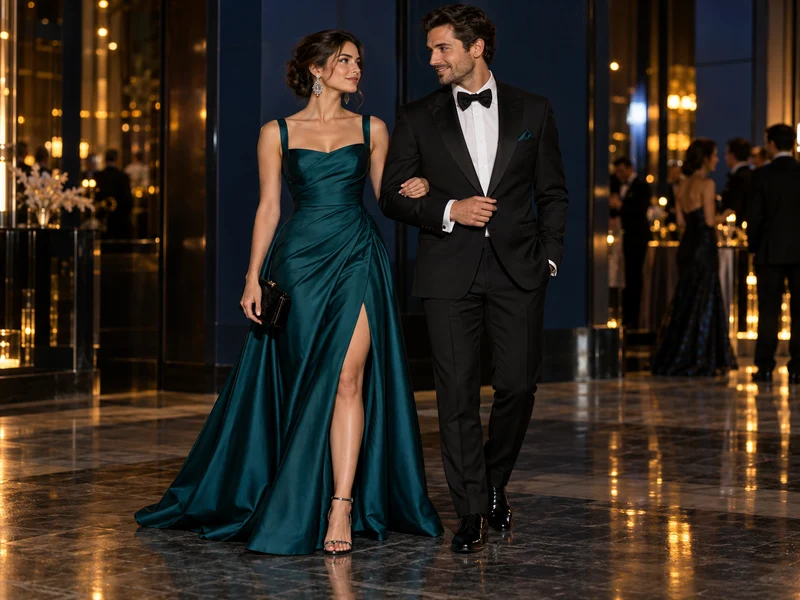
Deep teal is the strongest turquoise-family shade for formal nights. In satin, velvet or crepe, it reads as rich rather than playful. It also holds its own beside black suits, dark navy interiors, crystal jewelry and warm evening light.
For black tie, I would pair a deep-teal gown with silver, diamonds or crystal if I wanted a cooler finish. Gold creates a warmer, more classic mood. A black clutch and black heels are useful when you want the gown to remain the only major color statement.
Proms, graduations and daytime celebrations
Turquoise can work for both prom and graduation, but I would adjust the intensity. A prom look can take more shine, embellishment and drama. For graduation, a cleaner dress or tailored jumpsuit is easier to wear under a gown and less likely to compete with academic colors.
For daytime ceremonies, choose a medium turquoise, aqua or muted teal in a matte or softly textured fabric. Block heels, slingbacks or polished flats are usually more practical than very high stilettos, especially when the day involves stairs, grass or long periods of standing.
Beach holidays, resort dinners and summer parties
Turquoise feels completely at home in warm-weather settings. A linen shirt, swimsuit, sarong, crochet dress or lightweight co-ord can carry the color without looking formal. White, raffia, tan leather and shell-inspired accessories keep the palette relaxed.
For dinner, switch the fabric rather than changing the whole color story. A matte turquoise day dress can become a satin or draped teal dress at night. Metallic sandals and a small bag are enough to make the transition.
Photo shoots, fashion shows and themed events
This is where turquoise can go all the way. Graphic liner, metallic lids, glossy fabric, colored hair, oversized crystals and monochrome styling make sense when the goal is editorial impact. The dramatic turquoise beauty look often seen in fantasy-inspired images belongs here more naturally than at a conventional daytime wedding.
If you want to borrow that mood for a real event, choose one part of it. Keep the teal eyes and switch to nude lips, or wear the jeweled turquoise accessories with neutral makeup. Editing the idea down usually makes it more wearable without losing its character.
How much turquoise makeup should you wear?
You do not need turquoise lipstick, shadow, liner and clothing at the same time. In most event looks, the makeup feels more intentional when the color is concentrated in one area.
A fine teal liner with neutral shadow and soft rose or nude lips. Ideal for daytime events and first-time color wearers.
A diffused turquoise wash across the lid, brown or navy definition at the lashes, and a natural lip.
Layered teal shadow, shimmer or a graphic wing. Best for evening parties, shoots, shows and themed events.
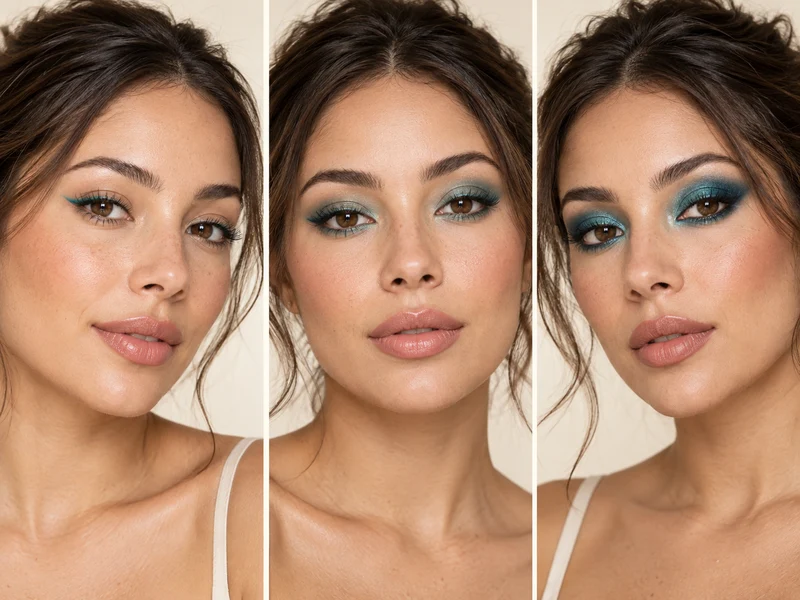
Colorful eye makeup is becoming easier to wear in modern forms. ELLE’s runway beauty coverage points to soft denim tones, diffused washes, aqua eyes and metallic teal liner rather than relying only on heavily frosted shadow. That is a useful approach in real life: make the edges softer for day and build more depth for evening.
Choosing turquoise for your skin tone
Skin tone rules should be treated as a starting point, not a restriction. Turquoise has enough blue and green variation that there is usually more than one flattering direction.
Clear aqua, blue-leaning turquoise and jewel-like teal can look especially crisp. Silver accessories reinforce the cooler effect.
Green-leaning turquoise, peacock teal and slightly muted aquatic shades often sit naturally beside gold, bronze and warm neutrals.
You can usually move between blue and green versions more easily. Let the event, fabric and accessories decide the direction.
Saturated turquoise and rich teal create beautiful contrast, while bright metallic accessories can make the color feel even more luminous.
The simplest test is to hold the color near your face in daylight. A good shade tends to make the complexion look clearer. If the color seems to overpower you, try a deeper or more muted version before giving up on turquoise altogether.
What colors go with turquoise?
For weddings and polished daytime looks, ivory, champagne and soft gold are the easiest partners. Black, navy and silver pull turquoise toward evening. Coral, fuchsia and purple create a stronger fashion statement, so use them in smaller doses unless the event encourages bold color.
Turquoise accessories are also useful when you do not want a full-color outfit. A bag, heel, earring or hair accessory can wake up black denim, cream tailoring or a simple neutral dress. Who What Wear has highlighted this exact role: turquoise accessories can bring energy and dimension to otherwise minimal outfits.
Easy outfit formulas that rarely fail
Garden wedding: turquoise midi dress + champagne heels + small ivory bag + gold earrings.
Cocktail party: fitted turquoise dress + black heels + compact metallic clutch.
Black tie: deep-teal gown + silver jewelry + black clutch + polished evening shoes.
Graduation: clean turquoise jumpsuit + block heels + minimal jewelry.
Beach event: aqua maxi dress + flat metallic sandals + raffia bag.
Photo shoot: monochrome teal outfit + graphic eye makeup + one crystal statement piece.
Common mistakes that make turquoise harder to wear
Matching every single item. A turquoise dress, shoes, bag, lipstick and jewelry can flatten the look. Repeat the color once or twice, then add contrast.
Ignoring the dress code. Bright aqua may feel too casual for black tie, while heavy velvet teal can feel too serious at a sunny beach reception.
Using several statement finishes together. Sequins, crystals, satin, metallic shadow and glossy lips all compete for attention. Choose one main texture and one supporting detail.
Forgetting the lighting. Turquoise can look greener under warm indoor light and bluer in cool daylight. Check the complete outfit in lighting similar to the venue.
Turquoise outfit and makeup FAQ
Is turquoise appropriate for a wedding guest?
Yes. Aqua and classic turquoise suit daytime and destination weddings, while deep teal works well for formal or evening celebrations. Check whether the bridal party is wearing the same color before choosing a full turquoise dress.
Can turquoise work for black tie?
Yes, especially in a deep teal satin, velvet, crepe or structured gown. Pair it with refined metallic jewelry and a dark, compact evening bag.
Should turquoise jewelry match the dress exactly?
No. Exact matching is not necessary. A related blue-green shade or a neutral metal usually creates more depth than repeating one identical tone everywhere.
What lipstick works with turquoise eyeshadow?
Nude rose, peachy nude, muted berry and soft brown-pink are reliable choices. For most events, keep the lip quieter when the eye color is intense.
What is the difference between aqua, turquoise and teal?
Aqua is usually the lightest and brightest. Turquoise sits in the middle with a clear blue-green character. Teal is typically deeper and darker, which makes it easier to use for formal evening looks.
Can I wear turquoise during colder seasons?
Absolutely. Choose deeper teal, heavier textures and darker partners such as navy, charcoal, chocolate or black instead of relying on pale beachy combinations.
The easiest way to make turquoise feel right
Start with the event rather than the trend. Pale aqua belongs naturally in daylight and coastal settings. Clear turquoise brings energy to celebrations. Deep teal offers the polish needed for dinners, galas and black-tie rooms.
Once the shade matches the occasion, the rest becomes simple: choose one main turquoise element, support it with a neutral or metallic partner, and decide whether the outfit or the makeup gets the strongest color. Turquoise does not need to be quiet, but it looks most elegant when every part of the look has a clear job.

About MOBZTER

No comments
We’d love to hear your thoughts! Share your opinion, experience, or questions in the comments below and join the conversation with other readers. Your feedback not only helps us improve future articles, but it may also help someone else who is looking for the same information.