
PDRN vs Peptides: Which Is Better for Skin Repair and Fine Lines?
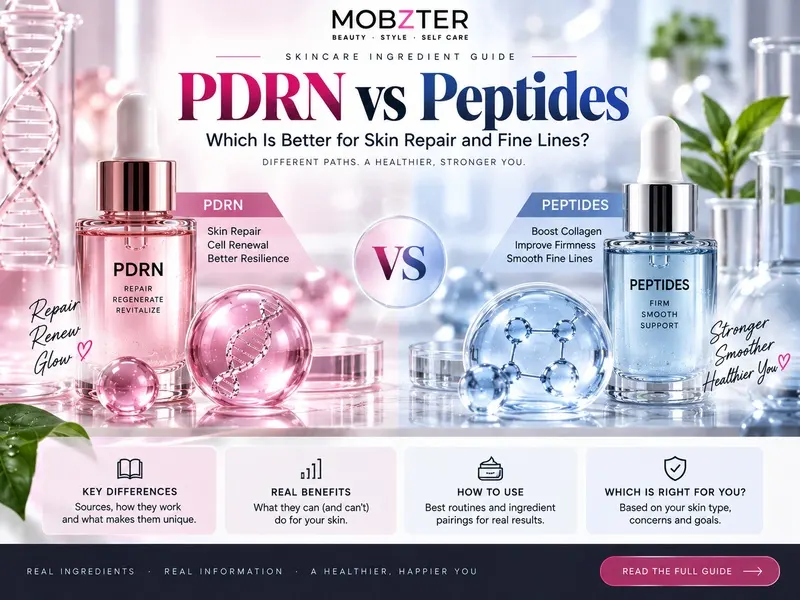
PDRN and peptides are both showing up everywhere in modern skincare, but they are not interchangeable ingredients. PDRN is usually positioned around recovery, hydration and skin-supporting repair, while peptides are more often used for signaling, firmness and the visible signs of aging. If your main concerns are fine lines, stressed skin or a routine that feels overloaded with actives, the more useful question is not which ingredient is more fashionable, but which one matches your skin goals and how strong the evidence really is.
This comparison looks at what PDRN and peptides can realistically do, where the research is stronger, how they fit into the same routine and when you may not need both.
Best known for recovery-focused skincare
PDRN stands for polydeoxyribonucleotide. In cosmetic products it is marketed for hydration, skin recovery and a healthier-looking barrier. Recent topical research is promising, but the evidence base is still relatively small and results cannot be assumed for every PDRN serum on the market.
Best known for signaling and visible aging support
Peptides are short chains of amino acids. Different peptide families are used for different purposes, so one peptide serum can behave very differently from another. Some are designed to support firmness, texture and the appearance of fine lines, while others focus on barrier or hydration support.
PDRN vs peptides at a glance
Neither ingredient wins every category. If your skin feels compromised, dehydrated or recently irritated by an aggressive routine, PDRN may be more appealing because most current products are designed around recovery and comfort. If your main goal is fine lines, firmness or a long-term anti-aging routine, peptides may be easier to justify because there are more types of peptide formulas and a broader research history behind the category.
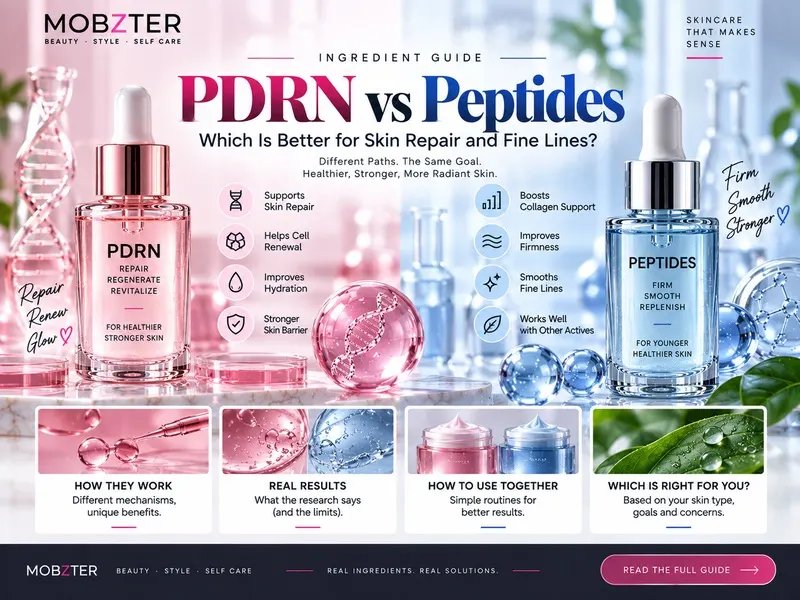
Which has better evidence for fine lines?
Peptides currently have the broader evidence base, but that does not mean every peptide cream will visibly erase wrinkles. A 2026 systematic review covering 19 randomized controlled trials and 1,341 participants found improvements in several skin-aging outcomes, while also describing the overall wrinkle benefit as modest and noting that some pooled effects were driven by oral peptide studies rather than topical products alone.
PDRN research is newer and smaller. A 2026 systematic review of polynucleotides and PDRN identified seven randomized trials with 183 participants. That is enough to justify interest, but not enough to say PDRN is proven superior to established anti-aging ingredients.
What about skin repair?
This is where the conversation gets more nuanced. “Skin repair” can mean different things in marketing. A product can improve hydration and barrier comfort without literally regenerating damaged tissue. Topical PDRN research published in 2026 found encouraging results with a specific 0.1% PDRN-850K formulation in a 28-day split-face study, but those findings belong to that tested formulation rather than every product that puts PDRN on the label.
Peptides can also support a healthier-looking barrier depending on the peptide used, but they are usually selected more for signaling, firmness and texture than for a post-irritation recovery routine.
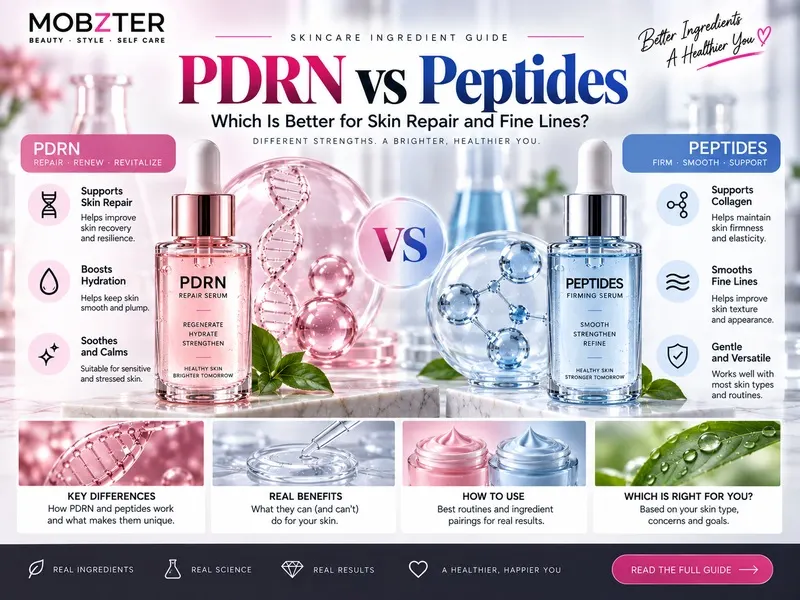
PDRN vs peptides by skin concern
Dry or stressed skin
Lean toward PDRN if the formula also contains humectants and barrier-friendly ingredients such as glycerin, panthenol, ceramides or hyaluronic acid.
Fine lines and firmness
Lean toward peptides, particularly formulas that clearly identify the peptide type and are supported by a well-designed moisturizing base.
Sensitive skin
Either can work, but fragrance, alcohol content and the rest of the formula matter more than the hero ingredient alone.
Beginner routine
Choose one first. A simple cleanser, moisturizer and sunscreen routine usually matters more than stacking two trendy serums immediately.
Can you use PDRN and peptides together?
In most routines, yes. There is no obvious reason they must be separated just because they are different ingredient families. The bigger issue is product complexity. If both formulas contain multiple actives, adding them at the same time can make it harder to work out what is helping or irritating your skin.
Cleanser → hydrating toner or essence → peptide serum → PDRN serum or cream → moisturizer → sunscreen in the morning.
If both products are serums, apply the thinner texture first. You do not need a long waiting period between them.
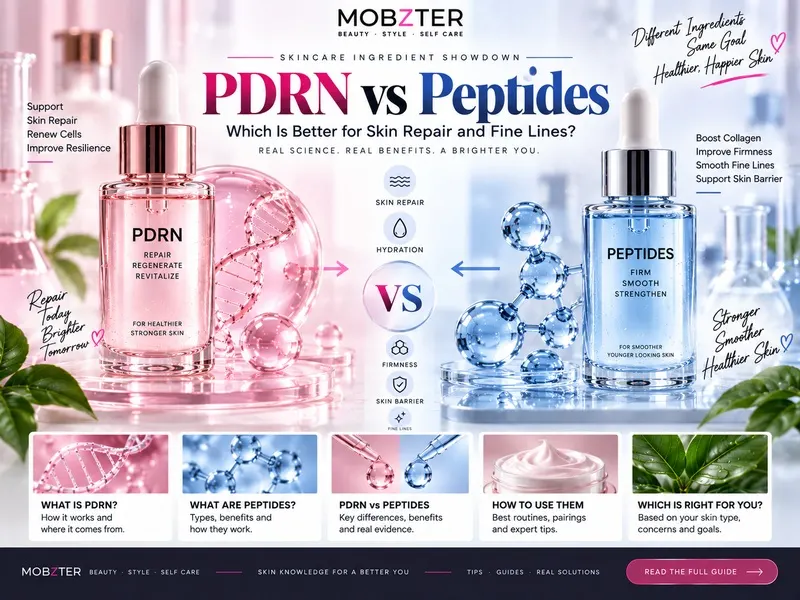
Can you use them with retinol or niacinamide?
Niacinamide generally fits easily into either routine and can be especially useful when hydration, uneven tone and barrier support are priorities. Retinoids are different: they have a much stronger evidence base for photoaging and fine lines, but they can also cause dryness and irritation. If you already use retinol, a PDRN or peptide product is better viewed as supportive skincare rather than a replacement for a proven retinoid.
If your skin is reactive, introduce one new product at a time and patch test. People with persistent dermatitis, active skin disease or significant irritation should get personalized advice from a dermatologist rather than trying to solve everything by stacking actives.
Which one is better value?
Peptide formulas are available across a much wider range of price points, so it is usually easier to find an affordable option. PDRN is still being marketed as a premium or trend-driven ingredient in many products, which means the price can rise faster than the evidence does.
That makes ingredient context important. A well-formulated moisturizer with peptides, glycerin and ceramides may be a smarter purchase than an expensive serum that relies almost entirely on the word PDRN. Likewise, a PDRN product with a strong hydrating base may be worthwhile even if PDRN itself is not doing all the work.
So which should you choose?
If you want the simplest answer, choose peptides for fine lines and firmness, and consider PDRN for recovery-focused hydration and stressed-looking skin. If you already own both and your skin tolerates them, they can live in the same routine.
What matters most is keeping expectations realistic. PDRN is an exciting skincare trend, but the topical evidence is still developing. Peptides have more research behind them as a category, but their results depend heavily on the exact peptide, concentration and product formulation. Neither should replace sunscreen, a basic moisturizer or evidence-backed treatment when those are what your skin actually needs.

About MOBZTER

No comments
We’d love to hear your thoughts! Share your opinion, experience, or questions in the comments below and join the conversation with other readers. Your feedback not only helps us improve future articles, but it may also help someone else who is looking for the same information.