
AI Shopping Is Becoming Real: How AI Agents Could Change Online Business and E-Commerce
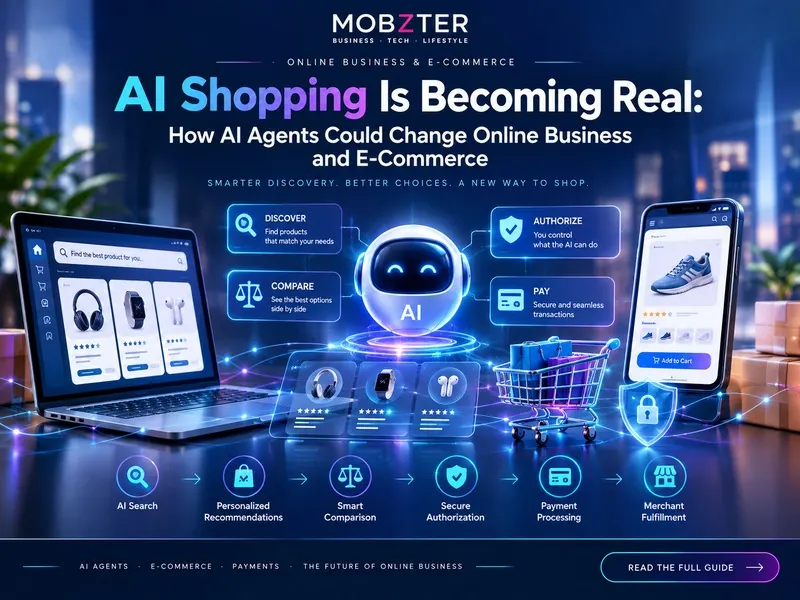
AI shopping is moving beyond chatbots that simply suggest products. The next phase of e-commerce is agentic commerce: software agents that can help discover products, compare options and, when a shopper explicitly allows it, participate in completing a purchase.
That sounds futuristic, but the infrastructure is already being built. Payment networks, commerce platforms and search companies are developing ways for AI agents to interact with merchants while keeping authorization, identity and payment controls in the loop. For online businesses, the important question is no longer whether shoppers will use AI. It is how products, prices and merchant information will be understood by those systems.
Traditional shopping asks the customer to open tabs, search stores, compare prices and check out manually. Agentic shopping tries to compress more of those steps into one guided conversation while leaving important decisions and permissions with the shopper.
What is agentic commerce?
An AI shopping agent is software designed to work toward a shopping goal rather than merely answer a question. A customer might ask for a lightweight laptop under a certain budget, specify battery-life requirements and preferred brands, then let the agent narrow hundreds of listings into a manageable shortlist.
The more advanced version can continue after discovery. With the right merchant and payment infrastructure, an agent may prepare a cart or transaction and use authorization rules established by the customer. That distinction matters: responsible agentic commerce is not supposed to mean an AI has unlimited permission to spend someone else's money.
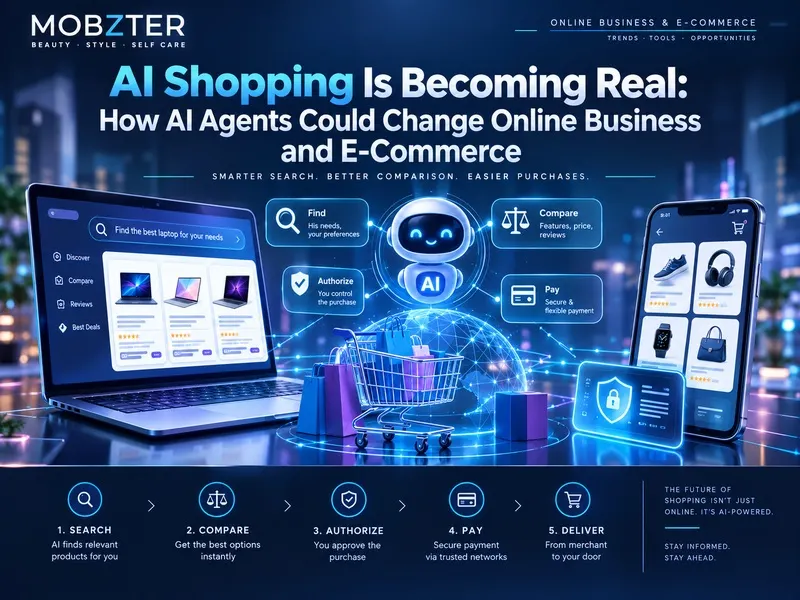
Intent2. Compare
Options3. Decide
Preference4. Authorize
Permission5. Pay
Transaction
Why 2026 feels different
AI-assisted product discovery has existed for a while, but commerce companies are now working on the transaction layer. Mastercard describes agentic commerce as a model in which trusted AI agents can act on a consumer's behalf within defined parameters. Visa has likewise been developing systems intended to connect AI-driven shopping with tokenized credentials and payment controls.
Google is also bringing AI deeper into shopping and merchant tools. For sellers, that makes structured, accurate product information increasingly important. An AI system cannot confidently recommend a product if it cannot understand the price, availability, variants, shipping terms or what makes that product different.
What changes for an online seller?
The storefront is no longer the only place where a buying decision happens. A potential customer may discover a product inside an AI interface before ever seeing the merchant's homepage.
That does not make websites irrelevant. It makes the underlying commerce data more valuable. Clear product titles, useful descriptions, structured data, current pricing, strong images, genuine reviews, transparent policies and reliable inventory information all help machines and humans understand an offer.
Does this replace traditional search and SEO?
Not necessarily. It adds another discovery layer. Search engines, marketplaces, social platforms, retailer apps and direct visits can continue to coexist. The difference is that an AI assistant may synthesize information from multiple sources before recommending what the customer should inspect next.
That creates a practical SEO lesson: writing only for a keyword is increasingly fragile. Product and editorial pages need to clearly explain entities, attributes, comparisons, use cases, limitations and evidence. Content that genuinely helps someone choose is also easier for an AI system to interpret than vague promotional copy.
The payment problem is bigger than the chatbot
Finding a pair of shoes is easy compared with safely allowing software to buy them. Payments introduce identity, fraud, authentication, consent, refunds and disputes. That is why payment networks are focusing on mechanisms such as tokenized credentials, transaction controls and ways to distinguish legitimate agents.
Consumers should still expect meaningful controls. Spending limits, merchant restrictions, confirmation requirements and the ability to revoke permissions are far more important than the novelty of an AI pressing a checkout button.
What AI shopping could feel like for customers

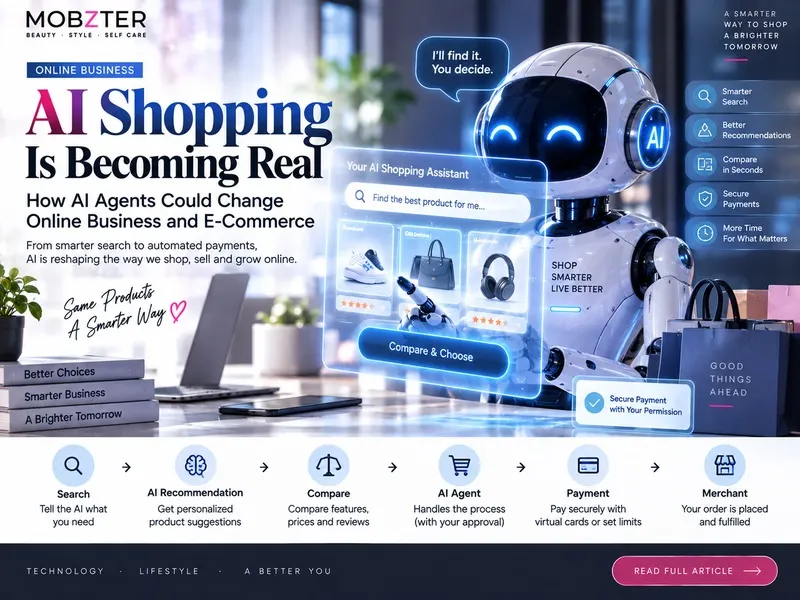
A useful shopping agent should reduce tedious work rather than remove customer choice. Imagine asking for three running shoes suitable for wide feet, under a fixed budget, available for delivery this week. Instead of opening twenty tabs, the assistant could build a comparison, explain trade-offs and take the shopper to the appropriate purchase step.
For merchants, this means competition may increasingly happen at the level of answer quality. Is the product actually suitable? Is the information complete? Can the seller fulfill the promise? A beautifully designed store cannot compensate for missing or unreliable commerce data.
Where businesses should be careful
Agentic commerce is still developing, and announcements about infrastructure should not be confused with universal consumer adoption. Capabilities will vary by market, merchant, payment provider and AI service. Businesses should also avoid handing sensitive credentials to unofficial automation tools simply because they promise autonomous purchasing.
There are also open questions around accountability, sponsored recommendations, privacy and how shoppers will know why an agent selected one merchant over another. Those questions will become more important as AI moves closer to the payment step.
A practical checklist for online businesses
Keep product feeds accurate. Use descriptive product names instead of internal codes. Make prices and availability easy to verify. Add structured data where appropriate. Explain shipping and returns in plain language. Maintain high-quality product images. Publish useful comparison and buying content, and monitor how customers are discovering the store.
The businesses most prepared for AI shopping may not be the ones with the flashiest AI widget. They may simply be the merchants whose information is easiest to understand, trust and transact with.
Google — shopping and Merchant Center AI updates
Mastercard — future of shopping and payments
Visa — What is agentic commerce?
AI shopping is still early enough that nobody can know exactly which interface will dominate. What is already clear is the direction: discovery, comparison and payment are beginning to connect. For online sellers, getting the fundamentals right now is a much safer bet than waiting for an AI agent to magically fix a weak catalog later.

About MOBZTER

No comments
We’d love to hear your thoughts! Share your opinion, experience, or questions in the comments below and join the conversation with other readers. Your feedback not only helps us improve future articles, but it may also help someone else who is looking for the same information.