
PDRN Skincare: What Is It, What Does It Do and Is It Worth the Hype?
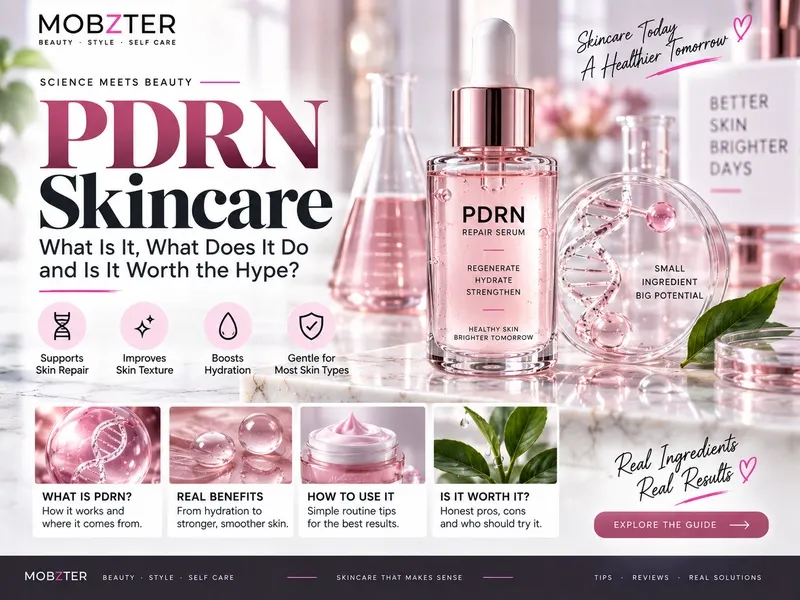
PDRN has gone from a clinic-adjacent ingredient to one of the most talked-about names in skincare. It is showing up in serums, eye creams, masks and K-beauty routines, often surrounded by big promises about repair, glow, firmness and smoother-looking skin. The interesting part is that PDRN is not pure marketing fiction—but the evidence is still much narrower than social media hype can make it sound.
So what is PDRN, what can topical skincare realistically do, and is it worth paying extra for? Here is the useful version, without pretending every bottle with “PDRN” on the label has been clinically proven.
Quick answer
PDRN stands for polydeoxyribonucleotide, a mixture of DNA-derived fragments studied in regenerative medicine and dermatology. There is growing evidence for PN/PDRN-based treatments, and a 2026 study also reported promising results from one specific topical PDRN formulation. That does not mean every PDRN cosmetic will deliver the same effect.
What is PDRN in skincare?
PDRN is made of deoxyribonucleotide chains. In medical and aesthetic research it has been investigated for tissue repair, wound healing and skin rejuvenation. Many commercial PDRN ingredients have historically been sourced from salmonid DNA, although newer beauty products may use differently sourced or processed DNA-derived materials.
The important distinction is topical skincare versus injectable or procedure-based PDRN. A serum sitting on the surface of your skin is not automatically equivalent to a clinic treatment. Delivery, molecular size, concentration, formulation and the rest of the ingredient system all matter.

What does the evidence actually say?
A July 2026 study published in PLOS ONE examined a medium-length PDRN preparation called PDRN-850K. The researchers tested mechanisms in fibroblasts, skin-delivery models and a randomized double-blind split-face clinical study. In the clinical portion, a 0.1% PDRN-850K eye cream was compared with 0.1% retinol over 28 days, with improvements reported in periocular wrinkles, dermal thickness, density and eye-bag measurements.
A separate 2026 systematic review of randomized clinical trials found seven trials with 183 participants across skin rejuvenation, scar prevention and wound-healing uses. The overall signal was positive, but the small number of trials and participants means the evidence base is still developing.
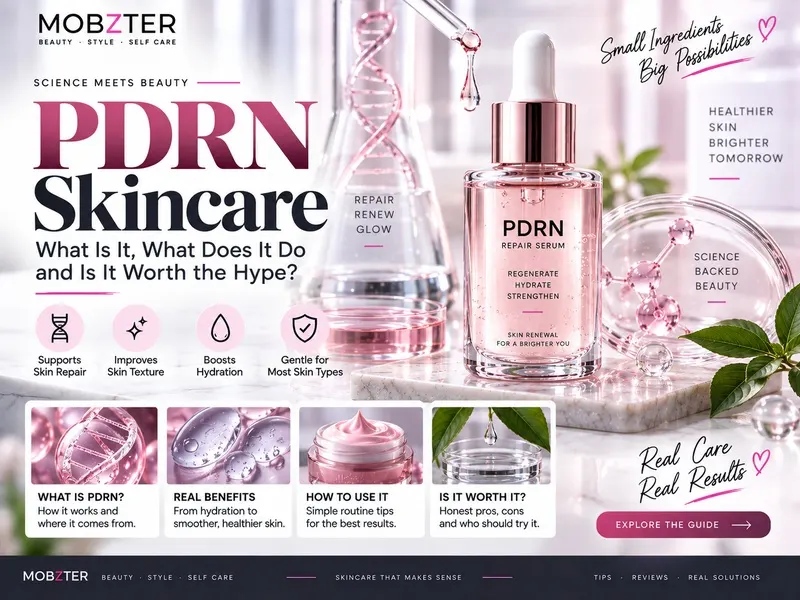
What benefits are realistic to expect?
What PDRN cannot replace
PDRN does not make sunscreen optional, it does not replace prescription acne care, and it should not be treated as a guaranteed substitute for retinoids, vitamin C or other better-established ingredients. If your main concern is pigmentation, acne, severe irritation or a diagnosed skin condition, choose proven treatments for that problem first.
It is also worth remembering that a product's visible improvement can come from the whole formula—glycerin, hyaluronic acid, panthenol, ceramides, peptides and emollients—not just the ingredient printed largest on the box.
How to use PDRN skincare in a simple routine

For a serum or essence, a simple routine is enough: gentle cleanser, PDRN product, moisturizer and sunscreen in the morning. At night, use cleanser, PDRN and moisturizer. If you already use strong actives such as retinoids or exfoliating acids, introduce the new product slowly instead of adding everything at once.
There is no special rule that PDRN must be used twice a day. Follow the product directions and watch how your skin responds. People with reactive skin should patch test first, especially if the formula also contains fragrance, acids or other active ingredients.
Can you use PDRN with niacinamide, peptides or retinol?
In general, there is no obvious reason a cosmetic PDRN product cannot be paired with common supportive ingredients such as niacinamide, peptides, ceramides or hyaluronic acid. The bigger issue is the complete formula and your tolerance.
Retinol is more interesting because the 2026 topical study directly compared a specific PDRN eye cream with 0.1% retinol. That still does not prove PDRN is universally “better than retinol.” Retinoids have a much larger evidence base across photoaging and acne. Think of PDRN as a possible complementary ingredient, not an automatic replacement.
Salmon PDRN vs plant-derived PDRN claims
This is an area where marketing can get messy. Traditional medical PDRN literature frequently involves highly purified DNA fragments derived from salmonid sources. Some newer cosmetics advertise plant-derived, vegan or bioengineered alternatives. Those products may be interesting, but do not assume that a different source automatically has the same clinical evidence as the material used in published PDRN studies.
If sourcing matters to you, check the ingredient list and the brand's documentation rather than relying on the word “PDRN” on the front label.
Who might actually enjoy a PDRN product?
PDRN makes the most sense for someone who already has the basics covered and wants to experiment with a repair-focused serum or cream. It makes less sense as a first skincare purchase if you still do not own a sunscreen or a moisturizer that works for your skin.
How to shop without paying for hype
Instead of choosing the product with the loudest “salmon DNA” claim, look at the complete formula, packaging, concentration if disclosed, supporting hydrators and whether the brand explains exactly what type of PDRN material it uses. A high price is not proof of better delivery or better results.
Also be cautious with before-and-after claims that promise instant collagen rebuilding. Immediate plumping is often hydration. Genuine changes in skin structure take time and need better evidence than a single glossy campaign image.
So, is PDRN worth it?
It can be—but it is still an optional upgrade, not a skincare essential. PDRN is more interesting than many trend ingredients because there is real regenerative research behind the category and topical evidence is beginning to appear. At the same time, the best current data is specific to particular formulations, and systematic reviews still describe a relatively small clinical evidence base.
If you enjoy K-beauty, want a gentle repair-oriented product and already use sunscreen, cleanser and moisturizer consistently, PDRN is a reasonable ingredient to explore. If your budget is tight, you are not missing a mandatory step by skipping it. A basic routine with proven ingredients can still do more for your skin than an expensive trend product used inconsistently.

About MOBZTER

No comments
We’d love to hear your thoughts! Share your opinion, experience, or questions in the comments below and join the conversation with other readers. Your feedback not only helps us improve future articles, but it may also help someone else who is looking for the same information.