
Gel Nail Polish vs Regular Nail Polish: Which Lasts Longer and Costs Less?
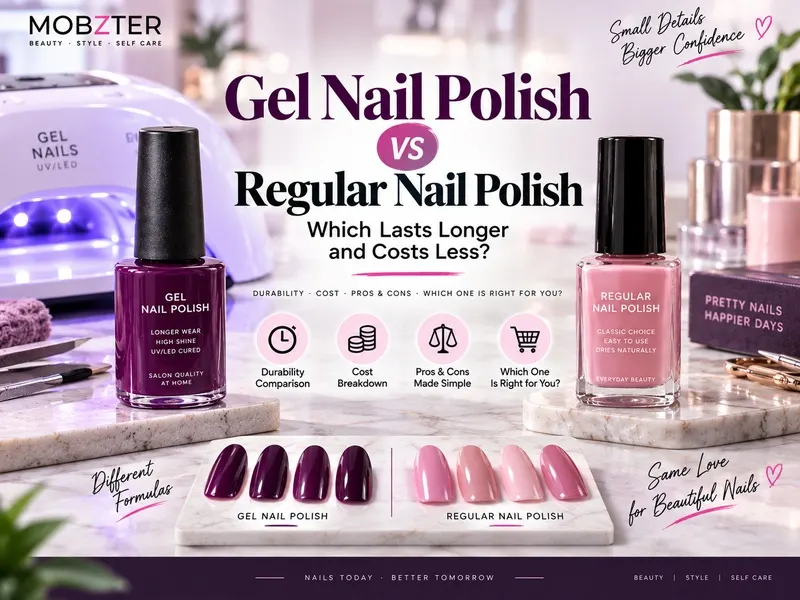
Gel polish and regular nail polish can look almost identical on day one, but they behave very differently once real life starts. One usually wins on wear time and gloss, while the other wins on simplicity, lower upfront cost and easier removal. The better choice depends less on which one looks more luxurious and more on how much time, money and maintenance you actually want to spend.
If you keep asking whether gel is really worth the extra money or whether classic polish is still the smarter everyday option, this comparison breaks it down by durability, cost, removal, nail health and convenience.
Best for longer wear, high shine and fewer touch-ups.
Best for easy color changes, lower cost and simple home removal.
Gel needs curing and more involved removal.
Depends on how long you keep one manicure and how often you repaint.
Which lasts longer?
Gel polish is the clear winner for wear time. A properly applied gel manicure can often stay glossy and presentable for around two to three weeks, while regular polish is more likely to chip or dull after several days, especially if your hands are exposed to water, cleaning, typing or frequent washing.
That does not mean every gel manicure lasts the same length of time. Nail preparation, product quality, application thickness, lamp performance and how hard you are on your hands all matter.
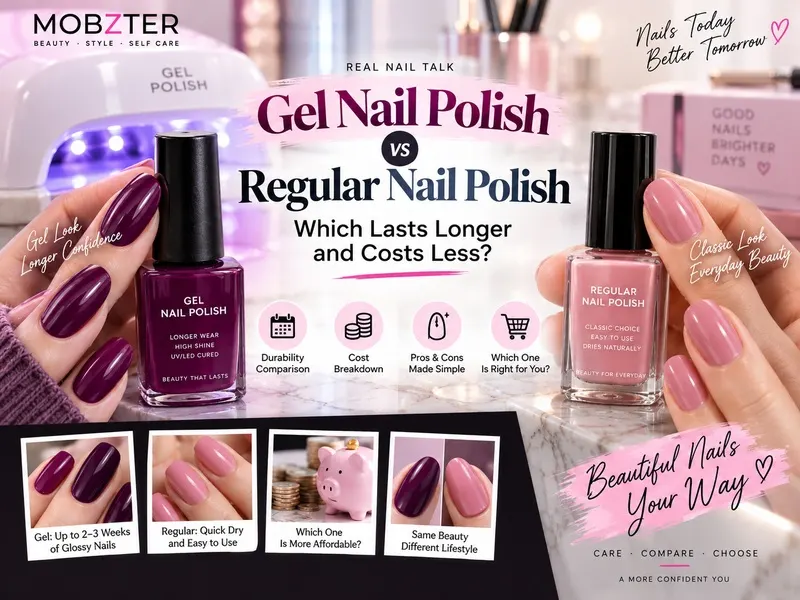
Why gel polish lasts longer
Regular polish dries mainly as solvents evaporate. Gel polish is different because it is cured under a UV or LED nail lamp, creating a harder and more resistant coating. That cured finish is why gel usually handles daily wear better and keeps its shine longer.
The downside is that gel also becomes more involved. You need the right lamp, the right curing process and a proper removal method. A manicure that lasts longer can save time between appointments, but it adds steps at both the beginning and the end.
Which costs less?
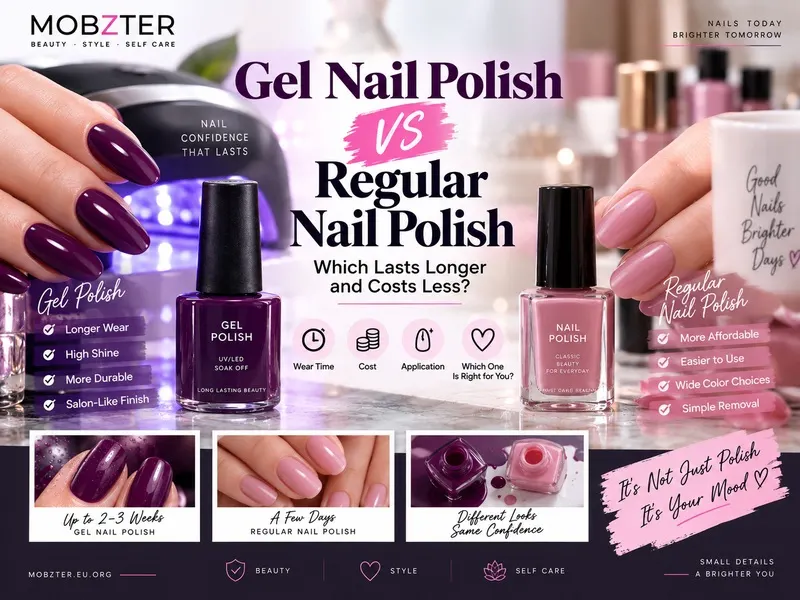
Regular nail polish usually costs less to start with. You can buy a bottle, apply it at home and remove it with standard polish remover without buying a curing lamp. If you enjoy changing your nail color every few days, that simplicity can make regular polish much more economical.
Gel can cost more per salon visit or require a larger home setup because you need compatible gel products, a lamp and removal supplies. But cost per day can narrow if you keep one gel manicure for two or three weeks instead of repainting regular polish several times.
Which is easier to apply at home?
Regular polish is generally easier for beginners because the process is familiar: base coat, color, top coat and air drying. Mistakes can usually be cleaned up quickly, and you do not need special curing equipment.
Gel can still be done at home, but the learning curve is steeper. Thin coats, correct curing time and keeping product off the skin all matter more. Rushing the process or using incompatible products can lead to lifting, wrinkling or uneven curing.
Which is easier to remove?
Regular polish wins again for convenience. It usually comes off quickly with nail polish remover. Gel needs a more careful removal process, commonly involving acetone and time for the product to soften.
This is also where damage often happens. Picking, scraping or peeling gel off can take layers of the natural nail with it. The American Academy of Dermatology specifically advises against picking off gel polish and recommends controlled acetone removal instead.
What about UV and LED lamps?
Gel polish needs light to cure. Many modern systems use LED lamps, but both UV and LED curing devices can involve ultraviolet exposure. The practical point is not to panic, but to use sensible precautions.
The AAD recommends applying broad-spectrum, water-resistant SPF 30 or higher to the hands before a gel manicure, or using dark opaque fingerless gloves. They also note that LED curing tends to use lower UV levels and cure more quickly than traditional UV lamps.
Which one is better for nail health?
Neither product automatically ruins your nails, and neither one is automatically healthy. Technique matters. Aggressive buffing, cutting cuticles, peeling polish, repeated acetone exposure and never taking breaks can all create problems.
If your nails are already thin, brittle or repeatedly splitting, traditional polish may be the gentler choice simply because it can be removed more easily. If you love gel, spacing out manicures and moisturizing nails and cuticles between sets can help.
Which one fits your lifestyle better?
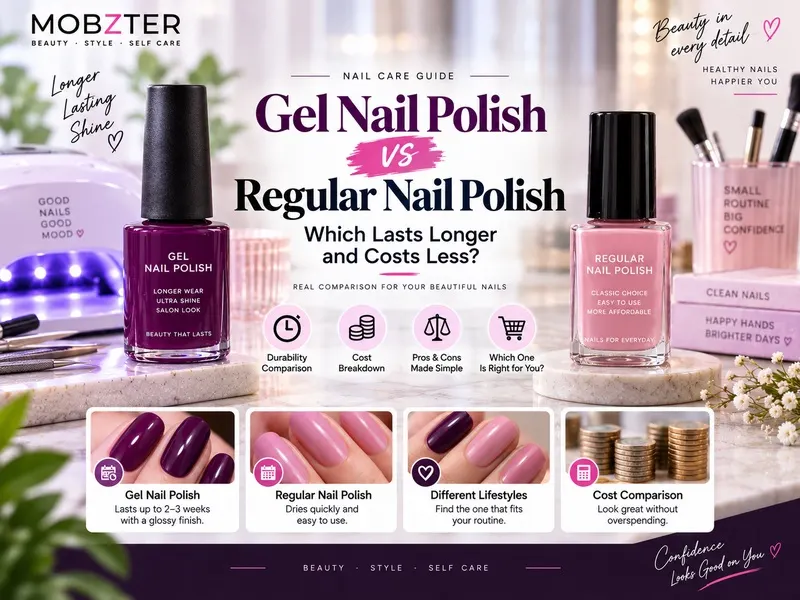
Gel can be useful if you do not want frequent repainting.
Regular polish makes frequent switches easier and cheaper.
Gel is appealing when you want a glossy manicure to stay intact for days.
Regular polish usually has the lower entry cost.
Gel vs regular polish for short nails
Both work beautifully on short nails. Gel can make a short manicure look extra glossy and polished for longer, while regular polish makes it easy to experiment with shades and switch styles frequently. Nail shape and color choice often affect the visual result more than the formula itself.
If you are trying to make short nails look longer, sheer pinks, soft mauves, nude shades and carefully placed French tips can visually elongate the nail. That also connects nicely with Mobzter's growing nail-shape and purple-nail guides.
Is gel worth paying more for?
It is worth it when the extra wear time solves a real problem for you. If you hate chips, travel often, have events coming up or simply want two to three weeks without thinking about your manicure, gel can justify its higher cost.
If you enjoy doing your nails often, get bored with one color quickly or want the easiest removal possible, regular polish can be the smarter choice even if it does not last as long.
How to make either manicure last longer
Start with clean, dry nails and avoid getting oil or lotion on the nail plate immediately before application. Keep coats thin, seal the free edge, protect your hands during cleaning and moisturize your cuticles regularly. With regular polish, a fresh layer of top coat can help extend shine. With gel, resist the urge to pick at lifting edges.
The best manicure is the one that fits your routine without turning nail care into a chore. Gel gives you staying power. Regular polish gives you freedom. If you know which of those matters more to you, the choice gets much easier.

About MOBZTER

No comments
We’d love to hear your thoughts! Share your opinion, experience, or questions in the comments below and join the conversation with other readers. Your feedback not only helps us improve future articles, but it may also help someone else who is looking for the same information.