
How to Get Glossy Skin From Face to Body Without Looking Greasy

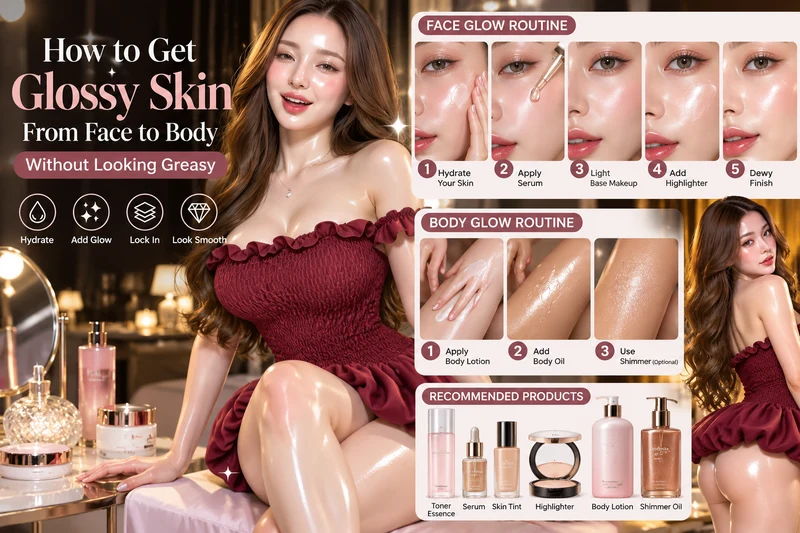
Glossy skin looks best when it reads as hydrated, smooth, and light-catching—not slippery. The effect comes from layering hydration, dewy complexion products, and carefully placed shine on the face, then repeating the same idea on the shoulders, collarbones, arms, and legs with body lotion, oil, or shimmer.
The goal is not to coat every inch of skin in gloss. A more believable glow comes from contrast: some areas stay softly satin, while the high points catch the light.
What glossy skin actually means
Glossy skin sits somewhere between glass skin, dewy makeup, and body glow. Glass skin focuses more on hydration, smoothness, and radiance, while makeup and body products add the stronger reflective finish you see under bright lighting or in photos.
Vogue’s recent glass-skin guide emphasizes hydration, radiance, and overall skin health as the foundation of the look. That matters because a glow product can make skin shiny, but it cannot create the same smooth effect if the surface underneath is dry or flaky.
Start with hydration, not highlighter
For the face, begin with a gentle cleanse and one or two lightweight hydrating layers. A toner or essence can add water, while a serum with humectants such as glycerin or hyaluronic acid helps the skin hold onto moisture.
Follow with moisturizer, then sunscreen during the day. If your sunscreen already has a dewy finish, you may need less glow product later.
Use a thin base instead of a heavy matte foundation
A skin tint, sheer foundation, or light layer of complexion makeup usually works better for glossy skin than a thick matte base. The idea is to even out tone without covering all of the skin’s natural dimension.
If you need more coverage, spot-conceal only where necessary. Keeping the rest of the base thin prevents the finish from looking heavy once highlighter or balm is added.
Where to place shine on the face
Apply a liquid or cream highlighter to the cheekbones, bridge of the nose, cupid’s bow, and a small amount on the forehead or chin if those areas suit your skin type.
For a wetter finish, tap a tiny amount of glow balm over the cheekbones after makeup. Avoid spreading balm across the whole T-zone, especially if you naturally get oily there.
Powder only where you need it
You do not have to avoid powder completely. A small amount around the sides of the nose, under the eyes, or through the center of the forehead can control unwanted shine without flattening the glow everywhere else.
Use a small brush rather than pressing powder over the full face. That keeps the cheekbones and outer face reflective while the areas that crease or get oily stay more controlled.

For the body, lotion comes before oil
Body glow works best on hydrated skin. Apply body lotion first, especially after showering, then add a lightweight body oil over the top. Allure notes that modern body oils are often designed to condition skin while leaving a smoother, more luminous finish without the heavy feel people associate with older formulas.
For a more subtle look, stop at body oil. For stronger shine, add shimmer oil or an illuminating body product only to the areas that naturally catch light.
The best places for body glow
Focus on the shoulders, collarbones, upper chest, fronts of the arms, shins, and the center of the legs. Those areas catch light naturally, so you need less product to make them look glossy.
For photos or evening lighting, you can add a little more to the shoulders and collarbones. On the legs, smooth the product down the center rather than coating every side equally.
Shimmer is optional
You can get glossy skin without visible glitter. Plain body oil gives more of a wet, glazed finish, while shimmer oils add fine reflective particles for a more obvious evening glow.
Allure describes shimmer body oils as products that can create a high-sheen finish, while regular body oils can give skin a glistening look with less sparkle. Choose based on whether you want natural radiance or a more dramatic finish.
Mixing illuminator into body lotion gives a softer result
If shimmer oil feels too strong, mix a small amount of liquid illuminator into body lotion before applying it. This spreads the reflection more evenly and makes it easier to control.
Makeup artists quoted by Allure also recommend applying body makeup on smooth, well-hydrated skin. If the product will rub against clothing, a transfer-resistant formula or a light layer of translucent powder on contact areas can help.

How to stop glossy skin from looking greasy
What to wear with glossy skin
Glossy skin works especially well with satin, fitted dresses, sleek black outfits, soft neutrals, and simple evening looks because the skin itself becomes part of the styling.
For a strong night-out combination, glossy shoulders and legs pair naturally with a fitted dress and transparent shoes. If you want outfit ideas, see our guides to the bodycon mini dress and clear platform heels.
Keep the finish intentional
The difference between polished glow and unwanted shine is placement. Hydrate the whole skin surface, but concentrate the visible gloss on the areas you want people to notice.
On the face, that usually means cheekbones and a few high points. On the body, it means shoulders, collarbones, arms, and legs. When the shine is selective, the result looks luminous, smooth, and deliberate rather than oily.

About MOBZTER

No comments
We’d love to hear your thoughts! Share your opinion, experience, or questions in the comments below and join the conversation with other readers. Your feedback not only helps us improve future articles, but it may also help someone else who is looking for the same information.