
Best Purple Lip Products for Dry Lips: Balm, Tint, Gloss or Lipstick?
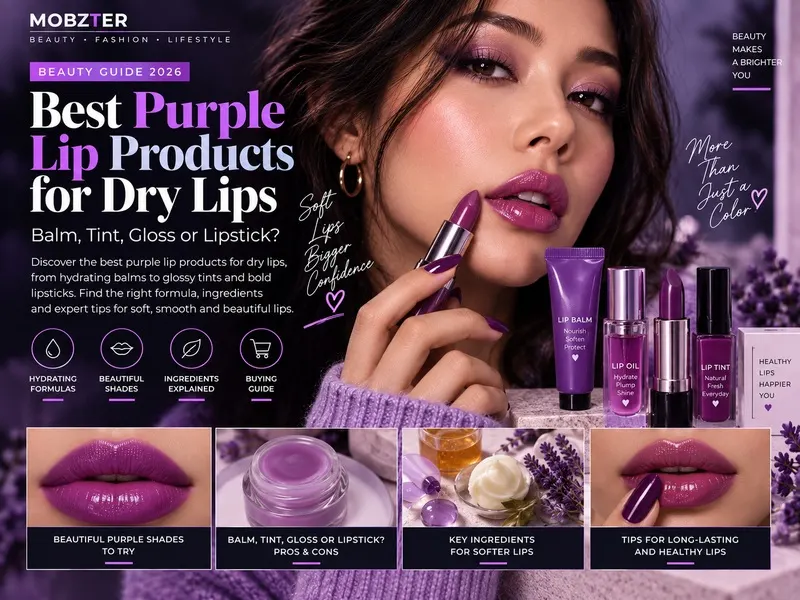
Purple lips can look sophisticated, playful or dramatic, but dry texture can change the result fast. A beautiful plum lipstick may emphasize flakes, while a sheer berry balm can make the same lips look smoother simply because the formula behaves differently.
That makes the better question less about finding one universally “best” purple product and more about choosing the right format. Balm, tint, gloss and lipstick solve different problems. This guide helps you decide which one makes the most sense when your lips are dry.
Choose balm when comfort is the priority, gloss or lip oil when you want shine and a smoother-looking surface, tint when you want lightweight color, and creamy lipstick when you want stronger purple pigment without starting with an ultra-dry matte finish.
Why Purple Lip Color Can Expose Dryness
Deeper colors create contrast. When pigment collects around flakes or fine texture, plum and violet can make those areas more obvious. Pale cool purples can create a different problem: if the formula is opaque and dry, the finish may look chalky rather than soft.
That does not mean dry lips cannot wear purple. Formula, preparation and finish usually matter more than the color family itself.
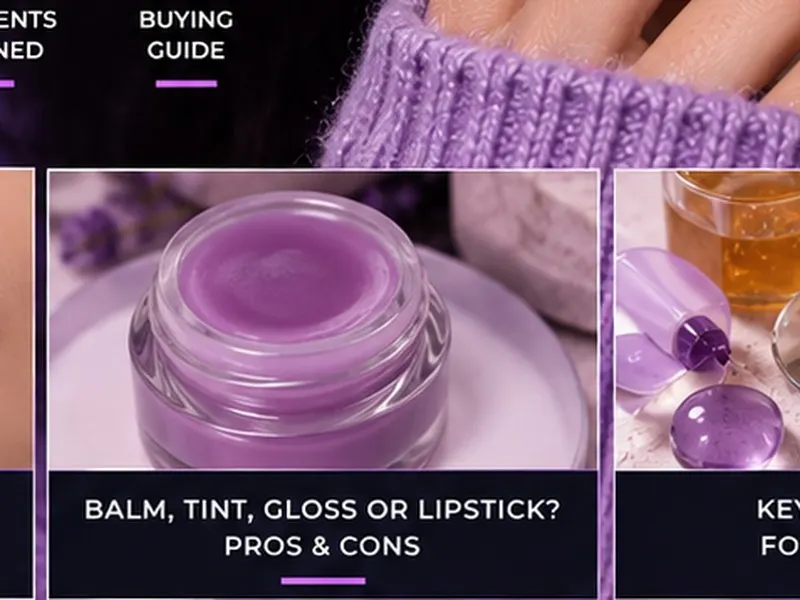
Balm vs Tint vs Gloss vs Lipstick
Usually sheer and forgiving. It lets natural lip color influence the result, so berry-purple can become surprisingly wearable.
The reflective finish can visually soften lip lines. Look for a comfortable conditioning formula rather than choosing solely by maximum shine.
A stain can leave color behind after the wet layer fades, but some formulas may feel drying. Pairing with balm can make a big difference.
Choose satin, cream or glossy lipstick when you want visible violet or plum while keeping more slip than a traditional flat matte.
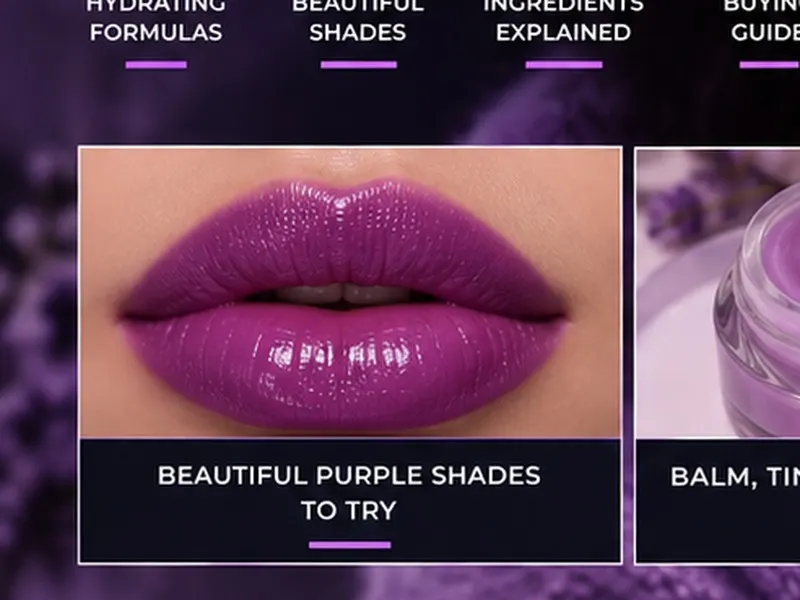
Which Purple Shade Is Most Forgiving?
Sheer berry, mauve and plum are useful starting points because they can blend with natural lip color rather than sitting on top as a solid block. Lavender and blue-violet make a stronger statement and may require more careful shade matching.
If you already know your undertone, use it as a starting point rather than a strict rule. Cool complexions often harmonize easily with blue-purple and berry shades, while warmer complexions may prefer mauve, red-plum and warmer berry. Neutral undertones have room to move in either direction.
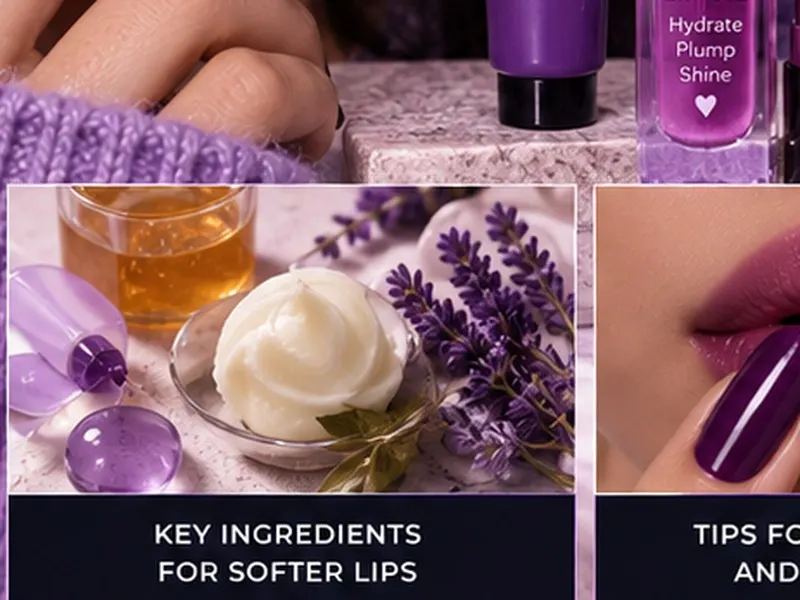
What Ingredients Should You Look For?
Do not judge a lip product from one fashionable ingredient on the front label. The complete formula determines how it feels. Still, ingredients commonly used in conditioning lip products can help you compare options.
Emollients and occlusive ingredients help reduce moisture loss and improve slip. Shea butter, squalane and various plant oils are common examples. Humectant-rich formulas can also support a more hydrated feel when balanced with ingredients that help hold moisture in.
Peptide lip treatments are another growing category. They are available as balms, serums and gloss-like products, but you should still judge them by comfort, hydration and the overall formula rather than assuming “peptide” automatically makes one product superior.
Real Products That Show How the Categories Differ
Current product lines make the format differences easy to see. Clinique's Almost Lipstick in Black Honey is a sheer, buildable lipstick-balm style option, while the brand's Superbalm Lip Treatment is positioned specifically for dry, distressed lips. These are useful examples of why someone prioritizing dryness may choose a treatment-first format over maximum pigment.
Fenty Beauty currently offers Gloss Bomb Heat in purple-family shades including Purple Pepp'r and Lavender Savage. The brand describes the formula as a lip gloss/plumper hybrid with conditioning ingredients. Because it is a plumping formula with a warming sensation, however, someone with sensitive or irritated lips may prefer a non-plumping conditioning gloss instead.
Fenty also offers Gloss Bomb Stix in Black'r Berry. The brand lists vitamin E, shea butter and squalane and describes the glossy lipstick as conditioning. That makes this type of glossy stick an interesting middle ground when you want more color than a balm but do not want a flat matte texture.
A Simple Buying Test Before You Spend Money
Prep Dry Lips Without Overdoing It
When lips are visibly flaky, aggressive scrubbing can make them more irritated. Start with a comfortable lip treatment and give it time to soften the surface. Before applying opaque lipstick, remove only obvious excess product so the color does not slide around.
A lip liner can improve definition with dark plum shades, but there is no need to cover the entire lip with a dry pencil if that makes your lips uncomfortable. Use it where you actually need control.
What I Would Buy First
If the goal is both purple color and comfort, I would build the category in stages rather than buying four similar products. Start with a sheer berry or plum balm for everyday wear. Add a conditioning gloss or oil for shine. Only then add a more pigmented creamy violet or plum lipstick if you want a stronger evening look.
That approach also makes it easier to layer. A purple balm can soften a lipstick, a clear or complementary gloss can change its finish, and a deeper tint can create a base underneath a more comfortable treatment. For dry lips, versatility is usually more useful than owning the most dramatic formula in the store.

About MOBZTER

No comments
We’d love to hear your thoughts! Share your opinion, experience, or questions in the comments below and join the conversation with other readers. Your feedback not only helps us improve future articles, but it may also help someone else who is looking for the same information.