
Short vs Medium vs Long French Nails: Which Length Looks Best for Everyday Style?
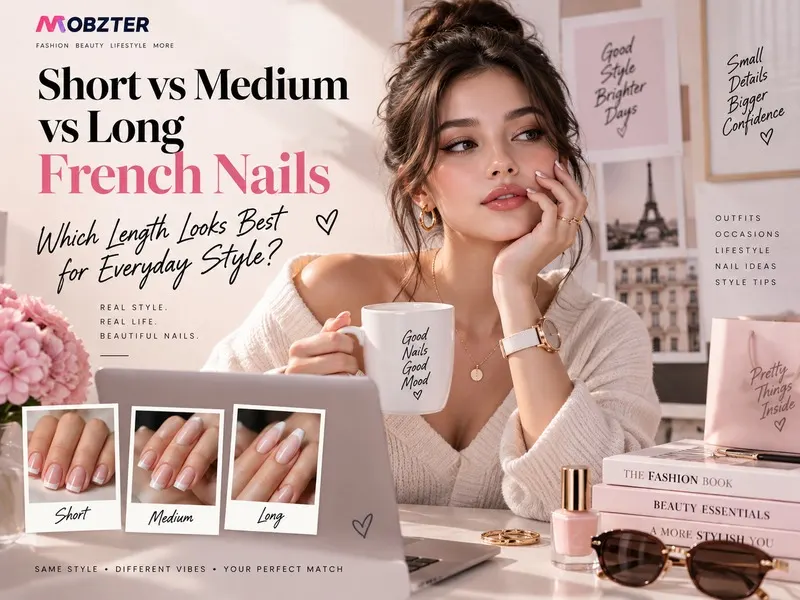
Short, medium and long French nails can all be beautiful, but they create very different impressions. Length changes the proportions of your hands, how noticeable the white tip feels, what nail shapes work best, and—perhaps most importantly—how easily your manicure fits into typing, getting dressed, opening bags and everything else that happens between outfit photos.
Short wins for low-maintenance everyday wear, medium gives the best balance of elegance and practicality, while long French nails make the strongest fashion statement.
Why French nails still work with almost everything
The classic neutral base and contrasting tip behave almost like a good white shirt: recognizable, easy to style and flexible enough to change with the rest of your look. Vogue describes the French manicure as versatile and flattering across skin tones, outfits and nail shapes, while today's versions range from tiny micro tips to colored, chrome and textured finishes.
That adaptability is also why nail length matters. A thin white line on a short natural nail feels minimal; the same idea on a long almond nail can become part of the outfit itself.
Short French nails: clean, practical and quietly stylish
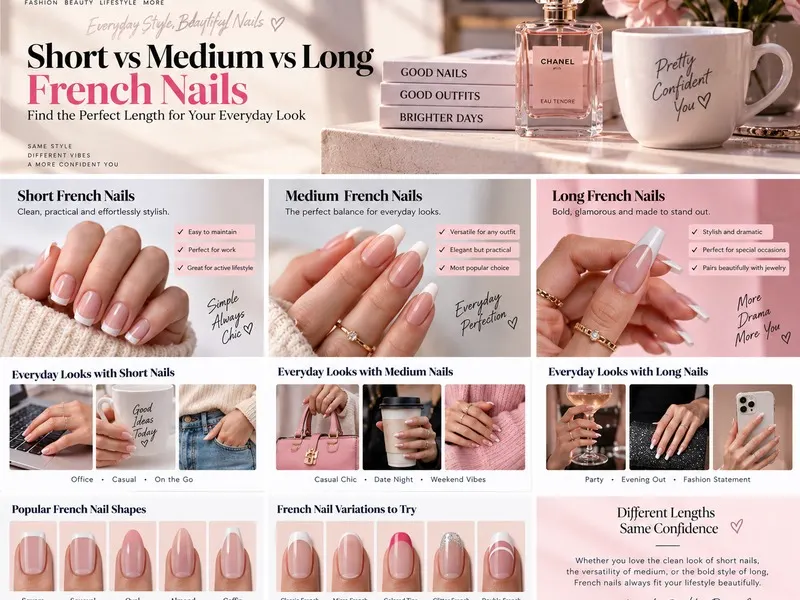
Short French nails are the easiest choice when you want your manicure to support an outfit rather than lead it. A slim micro-French tip looks particularly good here because it keeps the nail visually light instead of squeezing a thick white band onto a small surface. Short nails are also having a genuine fashion moment: Allure's nail artists point to micro-French designs as a year-round option that adds personality without overwhelming a short nail.
Try a soft square or squoval shape if your wardrobe leans classic. A short oval feels softer and more feminine. For office outfits, a sheer pink base with an ultra-thin cream tip can look more modern than a very bright, thick white line.
Medium French nails: the sweet spot for everyday fashion
If you change aesthetics often, medium length is hard to beat. There is enough free edge to show a crisp French curve, yet the manicure does not automatically become the loudest accessory you are wearing. It moves comfortably from a white tee and jeans to office tailoring, a weekend dress or dinner look.
Medium almond nails visually create a more elongated, romantic line. Medium soft-square nails feel cleaner and a little more contemporary. This is also the length where colored tips, double French lines and subtle shimmer can be noticeable without feeling overly elaborate.
Long French nails: when the manicure becomes an accessory
Long French nails make more sense when you want the manicure to participate in the outfit. Think stacked rings, a little black dress, platform heels, an evening bag or a deliberately glamorous Y2K-inspired look. The larger canvas can carry a deeper smile line, chrome edge, gems or an exaggerated almond shape without the details disappearing.
The trade-off is obvious once real life starts. Very long nails can be less convenient for keyboards, contact lenses, tiny clasps and everyday chores. Even celebrities known for dramatic manicures sometimes return to more modest lengths for everyday wear. Long is not automatically more elegant; it is simply more expressive.
Short vs medium vs long: what actually changes?
Your nail shape can matter as much as the length
Two French manicures at the same length can give completely different fashion energy. Square and squoval shapes read neat and structured. Oval is soft and natural. Almond visually lengthens the fingers and works especially well for a feminine wardrobe. Coffin and sharper shapes need more length, so they naturally feel more dramatic.
Match the French tip to your wardrobe, not just your nails
For capsule wardrobes, office outfits and neutral everyday looks, keep the tip narrow and the base sheer. If your closet is more playful, swap white for cherry red, chocolate, pastel blue or whatever color already appears in your accessories. A French manicure does not need to match your outfit exactly; repeating one small color from a bag, shoe or piece of jewelry is usually enough to make the whole look feel intentional.
And if your style moves between minimal and expressive, you do not have to choose a permanent team. A short micro-French can be perfect during a busy work month, medium almond nails can carry you through most occasions, and a longer set can be saved for a trip, party or week when you simply want a little more drama.
Keep the manicure pretty without forgetting the nail underneath
Length is a style choice, but healthy nails make every length look better. The American Academy of Dermatology notes that gel and artificial manicures can be tough on nails and recommends sensible manicure practices, including not cutting or aggressively pushing the cuticle and taking care when removing enhancements. If your nails are peeling, painful or unusually brittle, chasing extra length is rarely worth it.
So, which length looks best?
For pure practicality, short French nails take it. For maximum visual impact, long nails win. But if your wardrobe includes a little bit of everything—workwear, denim, dresses, sneakers, heels and the occasional night out—medium French nails are the easiest place to start. They give the fingers a graceful line and enough room for the French detail to shine without asking you to reorganize your day around your manicure.
The nicest part of French nails is that there really is no single correct length. The manicure has survived decades precisely because it adapts. Keep it short when life is busy, let it grow when you want more elegance, or go unapologetically long when your nails deserve to be part of the outfit.
Fashion inspiration and trend context: Vogue and Allure. Nail-health guidance: American Academy of Dermatology.
Vogue — French Tip Nail DesignsAllure — Modern French ManicuresAmerican Academy of Dermatology — Manicure & Pedicure Care
About MOBZTER

No comments
We’d love to hear your thoughts! Share your opinion, experience, or questions in the comments below and join the conversation with other readers. Your feedback not only helps us improve future articles, but it may also help someone else who is looking for the same information.